 |
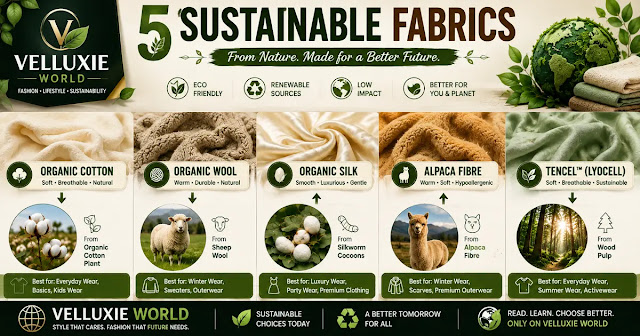
| From plants and animals to fabric: see how organic cotton, wool, silk, alpaca, and Tencel are made. |
5 Sustainable Fabrics for Clothing | Velluxie World
Introduction
What Are Sustainable Fabrics?
The clothes we wear are made from different types of fabrics, and the choice of fabric can affect more than just comfort and style. It can also influence how clothing is produced, how long it lasts, and what happens to it after use. This is why sustainable fabrics are becoming an important topic in modern fashion.
Sustainable fabrics are materials that are produced with a greater focus on reducing environmental impact and using resources responsibly. Depending on the fabric, this can involve factors such as water consumption, farming methods, chemical use, energy use, durability, and how the material is processed.
However, sustainable fashion is not as simple as choosing a fabric labelled natural or “eco-friendly.” A natural fabric is not automatically sustainable, and a manufactured fibre is not automatically harmful. The complete production process matters.
In this article, we will look closely at five fabrics commonly considered more sustainable choices for clothing: organic cotton, organic wool, organic silk, alpaca fibre, and Tencel/Lyocell.
We will compare these fabrics based on comfort, durability, breathability, warmth, everyday use, luxury clothing, and other practical factors. We will also explain which fabric may work better for summer, winter, everyday clothing, or premium fashion.
By the end, you should have a clearer idea of what sustainable fabrics are and what to check before buying sustainable clothing.
Organic Cotton
Organic cotton is one of the most popular sustainable fabric choices for clothing. It is made from cotton grown using organic farming methods, where the use of certain synthetic pesticides and fertilizers is restricted. The goal is to grow cotton in a way that supports healthier soil and reduces dependence on some conventional agricultural chemicals.
Cotton itself is a natural fibre, but organic cotton and conventional cotton are not produced in exactly the same way. This difference is important when choosing clothing based on sustainability.
What Makes Organic Cotton Different?
The main difference is the farming process. Organic cotton is grown according to organic standards that focus on soil management, crop practices, and restrictions on certain agricultural inputs. Depending on the certification and country, farmers may use methods such as crop rotation, natural soil management, and biological pest control.
However, the word “organic” does not mean that every stage of the clothing’s production is automatically sustainable. After cotton is harvested, it still needs to be processed, spun into yarn, woven or knitted into fabric, dyed, and manufactured into clothing.
So, when buying an organic cotton T-shirt or dress, it is useful to consider the entire supply chain, not just the fibre itself.
Comfort and Breathability
Organic cotton is popular for everyday clothing because it is generally soft, comfortable, and breathable. Cotton fabric can allow air to move around the body, making it a practical choice for warm weather.
This is one reason organic cotton works well for:
- T-shirts
- Shirts
- Dresses
- Casual trousers
- Lightweight tops
- Sleepwear
- Everyday basics
The actual comfort depends on the weave, weight, finishing, and quality of the fabric. A lightweight cotton fabric can feel very different from a thick cotton canvas, even though both are made from cotton.
If you love simple and comfortable fashion, explore these 90s outfit ideas for 2026 .🔗👇🔗
Is Organic Cotton Good for Summer?
Yes, organic cotton can be an excellent choice for summer clothing, particularly when the fabric is lightweight and breathable.
Loose-fitting cotton shirts, dresses, and tops can be comfortable in warm weather. Cotton can also absorb moisture, although it may take some time to dry after becoming wet.
For very hot or humid conditions, fabric construction matters just as much as the fibre. A lightweight, loose weave may feel cooler than a thick or tightly woven cotton fabric.
Durability and Everyday Use
Good-quality cotton clothing can last for a long time when it is properly cared for. Organic cotton is therefore useful for wardrobe basics that are worn frequently.
However, organic cotton is not automatically more durable than conventional cotton. Durability depends on factors such as fibre quality, yarn construction, fabric weight, stitching, and finishing.
Choosing a well-made garment and taking care of it properly can often have a bigger impact on its lifespan than simply choosing an organic label.
Limitations of Organic Cotton
Organic cotton still has environmental impacts. Cotton farming requires land and water, and the fabric needs energy and resources during processing and manufacturing.
Another important point is that organic cotton does not automatically mean low-water, chemical-free, or completely eco-friendly clothing. Different farms, certifications, processing methods, and supply chains can have very different impacts.
This is why shoppers should look beyond simple marketing claims and check whether a product has a credible certification or provides useful information about its production.
Who Should Choose Organic Cotton?
Organic cotton is a strong option for people looking for a comfortable fabric for everyday clothing, especially in warmer weather. It can be a practical choice when you want a natural fibre and want to pay attention to how the cotton was grown.
For the best overall choice, look for good-quality organic cotton with reliable certification and durable construction rather than choosing a garment only because the label says “organic.”
Overall, organic cotton is not a perfect fabric, but it can be a more responsible choice when it is produced and manufactured under credible standards and used in clothing that is made to last.
Organic Wool
Organic wool is a natural animal fibre that comes from sheep raised under organic farming standards. It is mainly known for its warmth, softness, durability, and ability to regulate temperature. Because wool can be used for many years when properly cared for, it can be a useful choice for people interested in longer-lasting clothing.
What Is Organic Wool?
Organic wool comes from sheep farms that follow specific organic production standards. These standards can include requirements related to animal welfare, land management, feed, and restrictions on certain chemicals and treatments.
The exact requirements can vary depending on the certification and country, so the term organic wool should ideally be supported by a recognised certification.
Like organic cotton, the word organic only describes certain parts of the production process. The wool still needs to be cleaned, processed, spun, dyed, and made into clothing.
Why Is Wool Useful for Clothing?
One of wool’s biggest advantages is its ability to provide warmth without necessarily being extremely heavy. Wool fibres can trap air, helping create insulation against cold temperatures.
Wool can also help manage moisture and temperature around the body. This makes it useful for clothing that needs to provide warmth while remaining relatively comfortable during changes in temperature.
Organic wool is commonly used for:
- Sweaters
- Coats
- Jackets
- Scarves
- Winter dresses
- Socks
- Thermal clothing
Is Organic Wool Good for Winter?
Organic wool is particularly suitable for winter clothing. A good wool sweater or coat can provide warmth while remaining breathable compared with some heavier synthetic materials.
Different types and weights of wool provide different levels of warmth. A lightweight wool fabric may work well for layering, while thicker wool can be more suitable for cold-weather outerwear.
Durability and Longevity
Wool can be a durable material when it is high quality and properly maintained. Many wool garments can remain useful for years, which can reduce the need to replace clothing frequently.
However, wool can also be sensitive to incorrect washing. High heat, excessive agitation, or unsuitable detergents can cause some wool garments to shrink, stretch, or lose their shape.
Following the care instructions is therefore important if you want a wool garment to last.
Things to Consider Before Buying
Organic wool is not automatically the same as ethical or completely sustainable wool. Animal welfare, land management, transportation, processing, and certification all matter.
If sustainability is important to you, look for clear information about the wool’s origin and certification rather than relying only on the word “organic.”
Overall
Organic wool is one of the more useful sustainable fabric choices for cold-weather clothing. Its warmth, natural properties, and potential for long-term use make it especially suitable for winter wardrobes.
For buyers, the best approach is to look for quality wool, reliable certification, responsible sourcing, and proper garment care. A durable wool garment that is worn for many years can be more useful than buying cheaper clothing that needs frequent replacement.
Organic Silk
Organic silk is a natural protein fibre produced by silkworms. It is known for its smooth texture, lightweight feel, natural shine, and luxurious appearance. Silk has been used in clothing for centuries, but today some consumers are also interested in how silk is produced and whether it can be a more responsible choice.
The term organic silk can refer to silk produced under specific organic or responsible production standards. Because standards and certifications can differ, it is important to check what a particular label actually guarantees.
What Makes Silk Different?
Silk is naturally smooth and lightweight. Unlike many heavier fabrics, it can feel comfortable against the skin and is often used in garments where softness and appearance are important.
Silk can also provide some temperature-regulating properties, which is one reason it is used in both lightweight clothing and some layering pieces.
It is commonly used for:
- Dresses
- Blouses
- Sarees
- Scarves
- Sleepwear
- Luxury shirts
- Lining and premium garments
Is Silk Good for Summer?
Lightweight silk can be a comfortable option for summer clothing. Its smooth texture and light construction can make it feel pleasant in warm weather.
However, not every silk garment will feel cool. Fabric weight, weave, colour, garment design, and lining can all affect how comfortable it feels.
For hot weather, lightweight and breathable silk constructions are generally more suitable than heavy silk fabrics.
Why Is Silk Considered a Luxury Fabric?
Silk has a distinctive appearance and feel that is difficult to reproduce exactly with many other natural fibres. Its smooth surface, drape, and natural sheen make it popular in premium and occasion clothing.
This also means silk garments can be more expensive than many everyday fabrics. Price alone, however, does not prove that a silk product was produced sustainably.
Sustainability Considerations
Silk is a natural and biodegradable fibre, but its environmental and ethical impact depends on how it is produced and processed.
Factors such as farming practices, water and energy use, processing, dyeing, transportation, and the treatment of silkworms can all matter.
There are also different silk-production systems, so consumers should not assume that every silk product has the same environmental or ethical profile.
If sustainability is the priority, look for transparent sourcing information and credible certifications rather than relying only on words such as natural, “eco,” and “organic.”
Is Organic Silk Durable?
Silk can be surprisingly strong for its weight, but it generally requires more careful handling than some everyday fabrics. Frequent exposure to harsh washing, high heat, or rough treatment can damage delicate silk garments.
Proper care can help extend the life of silk clothing. Following the manufacturer’s washing and storage instructions is especially important.
Overall
Organic silk can be an attractive choice for people looking for a natural, lightweight, and luxurious fabric. It works particularly well for premium clothing, special occasions, and lightweight garments.
However, silk should not be considered sustainable simply because it is natural. Production methods, certification, sourcing, processing, and garment longevity all matter. Choosing a high-quality silk garment and using it for many years can make it a more sensible purchase than frequently replacing lower-quality clothing.
Alpaca Fibre
Alpaca fibre is a natural animal fibre obtained from alpacas, which are animals native to South America. It is becoming more popular in fashion because it is soft, warm, lightweight, and often associated with premium knitwear.
Alpaca fibre is mainly used in sweaters, coats, scarves, hats, and other cold-weather clothing. Its combination of warmth and relatively low weight makes it an interesting alternative to traditional wool.
What Makes Alpaca Fibre Different?
One of the main characteristics of alpaca fibre is its softness. High-quality alpaca can feel smooth against the skin, although the exact feel depends on the fibre grade and how the garment is made.
Alpaca fibre is also naturally insulating. Its structure can help trap air, allowing garments to provide warmth without always needing to be very heavy.
It is commonly found in:
- Sweaters
- Winter coats
- Scarves
- Cardigans
- Hats
- Premium knitwear
Is Alpaca Fibre Good for Winter?
Yes. Alpaca is particularly suitable for cold-weather clothing because of its insulating properties.
A lightweight alpaca sweater can provide useful warmth while remaining comfortable for layering. Heavier alpaca garments can also work well as outer layers in colder conditions.
For winter clothing, the quality of the fibre and construction of the garment are important. A well-made alpaca garment can provide warmth while maintaining a soft and premium feel.
Alpaca Fibre and Durability
Alpaca fibre can be durable when it is properly processed and cared for. However, the durability of a finished garment depends on more than the fibre itself.
Knitting quality, fibre grade, garment construction, friction, and washing methods all influence how long an alpaca garment remains in good condition.
Because alpaca clothing can be relatively delicate, following the manufacturer’s care instructions is important.
Is Alpaca Fibre Sustainable?
Alpaca fibre is natural and biodegradable, but that alone does not make every alpaca product automatically sustainable.
The environmental impact can depend on land management, animal care, fibre processing, transportation, dyeing, and manufacturing. Responsible sourcing and good farming practices therefore matter.
Another advantage can be longevity. If a quality alpaca garment is purchased and worn for many years, the need to replace it frequently may be reduced.
What Should You Check Before Buying?
If you are considering alpaca clothing, look for information about the fibre’s origin and the manufacturer’s sourcing practices. A transparent brand should provide useful details rather than relying only on general claims such as “eco-friendly” or “sustainable.”
Also check the fibre composition. A garment labelled “alpaca” may contain a blend of alpaca with wool or synthetic fibres, so reading the composition label can tell you what you are actually buying.
Overall
Alpaca fibre is a strong option for people looking for warm, soft, lightweight, and premium winter clothing. Its natural properties make it especially useful for sweaters, coats, and other cold-weather garments.
However, responsible sourcing, quality, durability, and proper care are still important when judging whether a particular alpaca garment is a sustainable purchase.
Tencel/Lyocell
Tencel is a well-known brand name associated with lyocell and modal fibres, while Lyocell is the generic name for a type of regenerated cellulosic fibre. It is made from wood pulp that is processed into textile fibre.
Unlike cotton, wool, silk, and alpaca, lyocell is not a fibre taken directly from a plant or animal. It is manufactured from cellulose, usually sourced from wood.
Lyocell has become popular in modern clothing because it combines a soft feel with useful performance characteristics and can be used in many different types of garments.
What Is Lyocell Made From?
Lyocell is produced by dissolving cellulose and turning it into fibres through a controlled manufacturing process. The production method is important because the environmental performance of a cellulosic fibre depends on factors such as the source of the wood, chemicals used, solvent recovery, energy consumption, and manufacturing practices.
This is why it is better to look at the production process and sourcing rather than assuming that every wood-based fabric is automatically sustainable.
Comfort and Breathability
Lyocell is known for its smooth, soft feel. It can also be comfortable against the skin and is commonly used in lightweight clothing.
Depending on the fabric construction, lyocell can be useful for:
- T-shirts
- Shirts
- Dresses
- Trousers
- Casual wear
- Underwear
- Lightweight layers
Its soft texture makes it particularly appealing for people who want an alternative to rougher or heavier fabrics.
Is Lyocell Good for Summer?
Lyocell can work well for warm-weather clothing because lightweight lyocell fabrics can be breathable and comfortable.
However, the final performance depends on the fabric’s weight, weave or knit, garment design, and finishing. A thick lyocell fabric will not necessarily feel as cool as a lightweight one.
For summer, choosing a lightweight construction and relaxed garment design can make a bigger difference than the fibre name alone.
Durability and Care
Lyocell can be durable, but the care requirements depend on the particular garment. Washing instructions should always be followed because different finishes and fabric constructions can behave differently.
Good-quality clothing that is cared for properly can stay useful for a long time. This matters for sustainable fashion because extending the life of a garment can reduce the need for frequent replacement.
Is Tencel/Lyocell Sustainable?
Lyocell is often discussed as a more sustainable textile option because responsible production can use renewable wood resources and can incorporate systems designed to recover and reuse processing solvents.
But not every lyocell product should automatically be called sustainable. The source of the wood, manufacturing standards, energy use, dyes, transportation, and final garment quality all matter.
Tencel – branded fibres can provide additional information about their production and sourcing, but shoppers should still check the product details and certifications rather than relying on a single marketing word.
Overall
Tencel/Lyocell is a useful option for people looking for a soft, comfortable, versatile fabric with a potentially lower-impact production system when responsibly sourced and manufactured.
It is especially suitable for everyday clothing, lightweight layers, and warm-weather garments. The most responsible choice is not simply to look for the word “Lyocell,” but to consider sourcing, production, certification, garment quality, and how long the clothing is likely to be worn.
Detailed Comparison of These 5 Sustainable Fabrics
All five fabrics discussed in this article have different strengths. There is no single fabric that is perfect for every type of clothing. The right choice depends on the season, purpose, comfort, budget, durability, and how the fabric was produced.
Want to learn how different fabrics and outfits look on the runway? Check out our ramp walk guide. 🔗🔗👇
Fabric. Best For. Main Strength. Season
Organic Cotton Everyday clothing Comfort and breathability. Spring & Summer
Organic Wool Winter clothing. Warmth and insulation. Autumn & Winter
Organic Silk. Luxury clothing. Softness and elegant appearance Spring & Summer
Alpaca Fibre. Premium winter wear. Warmth and softness. Autumn & Winter
Organic Cotton vs Tencel/Lyocell
Organic cotton and Tencel/Lyocell are both useful for everyday clothing. Organic cotton is a natural fibre and is widely available in basic clothing such as T-shirts and shirts.
Tencel/Lyocell has a particularly smooth and soft feel and can work well for dresses, trousers, shirts, and lightweight garments.
If you prefer a traditional natural fibre, organic cotton may be the more familiar choice. If softness and a smooth drape are more important, lyocell can be worth considering.
Organic Wool vs Alpaca Fibre
Both organic wool and alpaca fibre are strong choices for colder weather.
Organic wool is generally more versatile and is available in a wide range of garments and weights. Alpaca is often chosen for its softness, warmth, and premium feel.
For everyday winter clothing, good-quality wool can be a practical option. For premium knitwear or a softer luxury feel, alpaca may be more appealing.
Organic Silk vs Tencel/Lyocell
These two fabrics can both be used for lightweight clothing, but they offer different experiences.
Silk has a distinctive natural feel, drape, and appearance that makes it popular for luxury and occasion clothing. Tencel/Lyocell is generally more practical for everyday garments and can offer a soft, smooth texture.
If the main priority is luxury and elegant appearance, silk has an advantage. For everyday versatility, lyocell can be a more practical choice.
Which Fabric Is the Most Sustainable?
There is no simple winner. 👇
Sustainability depends on much more than the fibre name. Farming or forestry practices, water and energy use, chemicals, processing, transportation, certifications, garment quality, and product lifespan can all influence the overall impact.
A high-quality garment made from a responsibly sourced fabric and worn for many years may be a better choice than a cheaply produced garment that is quickly discarded.
Therefore, instead of asking Which fabric is 100% sustainable? , it is more useful to ask Which fabric is the right choice for this garment, and how responsibly was it produced?
This approach helps avoid oversimplified sustainability claims and makes it easier to choose clothing that is comfortable, durable, and suitable for long-term use.
Best Sustainable Fabric for Different Types of Clothing
There is no single sustainable fabric that works best for every situation. The right choice depends on the weather, type of clothing, comfort, budget, and how often you plan to wear the garment.
Best for Summer Clothing: Organic Cotton
For everyday summer clothing, organic cotton is a strong choice. Lightweight cotton can be breathable and comfortable, making it suitable for T-shirts, shirts, dresses, and casual wear.
Tencel/Lyocell is another good option, especially when you prefer a smoother and softer fabric.
Best for Winter Clothing: Organic Wool
For cold weather, organic wool is one of the most practical options. Wool can provide insulation while remaining breathable, making it useful for sweaters, coats, jackets, and winter layers.
Alpaca fibre is another excellent choice when softness and premium warmth are important.
Best for Everyday Clothing: Organic Cotton or Tencel/Lyocell
For clothing that you wear regularly, organic cotton and Tencel/Lyocell are both useful options.
Organic cotton works particularly well for basic wardrobe pieces because it is familiar, versatile, and available in many different fabric weights.
Tencel/Lyocell can be a good choice when you want a smooth, soft fabric for shirts, trousers, dresses, or lightweight everyday clothing.
Best for Luxury Clothing: Organic Silk
For luxury and occasion wear, organic silk can be an attractive choice. Its smooth texture, natural appearance, and elegant drape make it suitable for premium dresses, blouses, scarves, and other special garments.
Alpaca fibre can also work well for luxury winter clothing, particularly premium knitwear and coats.
Quick Choice Guide
If you want a simple way to choose:
- Summer: Organic cotton or lightweight Tencel/Lyocell
- Winter: Organic wool or alpaca fibre
- Everyday: Organic cotton or Tencel/Lyocell
- Luxury: Organic silk or premium alpaca
- Soft winter knitwear: Alpaca fibre
- Lightweight premium clothing: Organic silk
The most sustainable choice is not always the fabric with the strongest environmental marketing claim. A fabric that suits your needs, lasts a long time, and is actually worn regularly can be a better purchase than something bought only because it is labelled eco-friendly.
Natural vs Sustainable — Important Difference
The words natural and sustainable are often used together in fashion, but they do not mean the same thing.
A natural fibre comes from a natural source. Cotton comes from a plant, while wool, silk, and alpaca fibre come from animals. Tencel/Lyocell is different because it is a manufactured fibre made from cellulose, usually sourced from wood.
Sustainable, on the other hand, describes a broader approach to production and consumption. It can involve how resources are used, how materials are produced, the chemicals and energy involved, working conditions, durability, waste, and how long a product remains useful.
Natural Does Not Always Mean Sustainable
It is easy to assume that a natural fabric must be environmentally friendly, but that is not always true.
For example, natural fibres can require land, water, energy, and other resources. Their environmental impact can also vary depending on farming methods, processing, dyeing, transportation, and manufacturing.
This means simply seeing the word “natural” on a clothing label is not enough to judge the sustainability of a garment.
Sustainable Does Not Always Mean Natural
A manufactured fibre can also be produced using processes designed to reduce environmental impact.
Tencel/Lyocell is a good example. It is not a natural fibre in the same sense as cotton or wool because cellulose is processed into a regenerated fibre. However, responsibly sourced raw materials and controlled manufacturing processes can make certain lyocell products a potentially lower-impact option.
Why This Difference Matters
Understanding the difference helps shoppers avoid misleading assumptions.
Instead of asking only:
Is this fabric natural?
it is better to ask:
How was this fabric sourced, produced, processed, and made into the final garment?
You should also consider how long you are likely to wear the clothing. A durable garment that remains in your wardrobe for years can be a more responsible purchase than a garment that is replaced after only a few uses.
In simple terms, natural describes where a fibre comes from, while sustainable describes how responsibly the material and product are produced and used.
That is why sustainability should be judged by the complete life cycle of a garment rather than by a single word on its label.
 |
| Discover five sustainable fabrics, their natural sources, benefits, drawbacks, and best uses for clothing. |
What to Check When Buying Sustainable Fabrics
Choosing sustainable clothing is not only about finding a fabric with words like organic, natural,” and eco-friendly on the label. Before buying, it is useful to look at the fabric composition, certification, quality, and information provided by the brand.
Check the Fabric Composition
Always read the composition label. It tells you exactly what the garment is made from.
For example, a product described as an “alpaca sweater” may contain only a small percentage of alpaca and be blended with wool or synthetic fibres. Knowing the percentage helps you understand what you are actually buying.
Look for Credible Certifications
If a brand makes an organic or sustainability claim, check whether it provides information about a recognised certification or standard.
A certification can provide more confidence than a vague claim such as 100% eco-friendly. However, different certifications cover different parts of production, so it is useful to understand what the certification actually verifies.
Check the Quality
Sustainability is also connected to durability. A high-quality garment that can be worn for years may be a better choice than a cheaper item that quickly loses its shape or becomes damaged.
Look at:
- Stitching quality
- Fabric thickness
- Seams
- Buttons and zippers
- Overall construction
- Whether the fabric feels suitable for regular use
Check the Care Instructions
Some sustainable fabrics need special care. Wool, silk, and alpaca, for example, may require more careful washing than everyday cotton.
Before buying, check whether you can realistically follow the care instructions. A garment that is difficult to maintain may not be the right choice for your lifestyle.
Look for Transparent Brand Information
A responsible brand should ideally provide useful information about where its materials come from and how its products are made.
Be cautious when a product makes broad claims such as green, clean, or planet-friendly without explaining what those claims mean.
Think About How Often You Will Wear It
One of the simplest questions is :
📝 Will I actually wear this many times?
Buying a sustainable fabric is less useful if the garment stays unused in your wardrobe. Choose clothing that fits your lifestyle, personal style, and actual needs.
In the end, the best purchase is usually a garment that is well made, suitable for your needs, responsibly sourced, and likely to be worn for a long time.
Common Mistakes When Choosing Sustainable Fabrics
Choosing sustainable clothing can be confusing, especially when brands use many different environmental claims. Avoiding a few common mistakes can help you make better decisions.
1. Assuming Natural Means Sustainable
Cotton, wool, silk, and alpaca are natural fibres, but their environmental impact can vary depending on how they are produced and processed.
2. Trusting Every Eco-Friendly Claim
Words such as green, eco, and planet-friendly do not always tell you exactly how a product was made. Look for specific information and credible certifications where possible.
3. Ignoring Fabric Composition
A garment may be marketed as a particular premium fabric even though it contains a blend of several materials. Always check the composition label before buying.
4. Choosing Price Over Quality
A very cheap garment may not last long. If you have to replace it repeatedly, the overall environmental impact can be greater.
5. Buying Clothes You Will Rarely Wear
A sustainable fabric is not useful if the garment remains unused. Choose pieces that fit your lifestyle and that you expect to wear regularly.
6. Ignoring Care Instructions
Incorrect washing or drying can shorten the life of a garment. Always follow the care instructions, especially for wool, silk, and alpaca clothing.
The goal is not to find a perfect fabric. The better approach is to choose the right fabric, good quality, responsible sourcing, and long-term use.
Advantages and Disadvantages of the 5 Sustainable Fabrics
Every fabric has strengths and limitations. Understanding both sides can help you choose clothing based on your actual needs rather than marketing claims.
Organic Cotton
Advantages: Comfortable, breathable, versatile, and suitable for everyday clothing and warm weather.
Disadvantages: Cotton production can require significant resources, and the fabric can absorb moisture and take longer to dry.
Organic Wool
Advantages: Warm, insulating, breathable, and potentially long-lasting when properly cared for.
Disadvantages: Some wool garments require careful washing and storage. Farming and animal-welfare practices also need to be considered.
Organic Silk
Advantages: Soft, lightweight, smooth, luxurious, and suitable for premium and occasion clothing.
Disadvantages: It can be delicate, expensive, and may require careful cleaning. The sustainability of silk also depends on how it is produced.
Alpaca Fibre
Advantages: Warm, soft, lightweight, and well suited to premium winter clothing.
Disadvantages: High-quality alpaca garments can be expensive and may require careful care. Responsible animal and land management are also important.
Tencel/Lyocell
Advantages: Soft, smooth, versatile, and suitable for lightweight and everyday clothing.
Disadvantages: Its sustainability depends on raw-material sourcing and manufacturing practices. Different products can have different environmental impacts.
Overall, no fabric is perfect. The best choice depends on the clothing’s purpose, quality, production process, durability, and how long you will actually use it.
FAQS 📌About Sustainable Fabrics
1. What are the most sustainable fabrics for clothing?
Answer ➖ There is no single fabric that is always the most sustainable. Organic cotton, organic wool, organic silk, alpaca fibre, and responsibly produced Tencel/Lyocell can all be suitable options depending on how they are sourced and manufactured.
2. Is organic cotton better than regular cotton?
Answer ➖ Organic cotton is produced under organic farming standards that restrict certain synthetic agricultural inputs. However, organic does not automatically mean that the entire garment has a low environmental impact. Processing, dyeing, manufacturing, and garment quality also matter.
3. Is Tencel the same as Lyocell?
Answer ➖ Not exactly. Lyocell is the generic name of the fibre, while Tencel is a brand associated with lyocell and other cellulosic fibres. Always check the product label to see the exact fibre composition.
4. Is wool a sustainable fabric?
Answer ➖ Wool is a natural and biodegradable fibre, and a quality wool garment can last for many years. However, its overall sustainability depends on factors such as farming practices, animal welfare, land management, processing, transportation, and garment lifespan.
5. Is silk environmentally friendly?
Answer ➖ Silk is a natural and biodegradable fibre, but that does not automatically make every silk product environmentally friendly. Production methods, processing, energy and water use, sourcing, and the treatment of silkworms can all influence its overall impact.
6. Is alpaca fibre better than wool?
Answer ➖ Neither is automatically better. Alpaca can offer softness, warmth, and a premium feel, while wool is widely available and highly versatile. The better choice depends on the garment, quality, sourcing, price, and how you plan to use it.
7. Which sustainable fabric is best for summer?
Answer ➖ Lightweight organic cotton and Tencel/Lyocell are good options for many summer garments. Organic silk can also work well when a more luxurious fabric is desired.
8. Which sustainable fabric is best for winter?
Answer ➖ Organic wool and alpaca fibre are particularly suitable for winter because of their insulating properties. The weight and construction of the garment also affect how warm it will feel.
9. What should I look for when buying sustainable clothing?
Answer ➖ Check the fabric composition, credible certifications, sourcing information, garment quality, care requirements, and how often you expect to wear the item. Avoid relying only on vague terms such as eco-friendly.
10. Can a natural fabric be unsustainable?
Answer ➖ Yes. Natural describes the source of a fibre, not its complete environmental impact. Farming, processing, dyeing, manufacturing, transportation, and product lifespan can all affect sustainability.
11. Does expensive clothing mean it is sustainable?
Answer ➖ No. A high price does not automatically prove responsible production. Look for evidence about materials, sourcing, manufacturing, quality, and durability instead of using price as the main indicator.
12. What is the best sustainable fabric overall?
Answer ➖ There is no universal winner. Organic cotton can be practical for everyday and summer clothing, organic wool and alpaca are strong choices for winter, organic silk works well for luxury clothing, and Tencel/Lyocell can be versatile for everyday and lightweight garments.
Want to use AI for fashion ideas? Read our guide on how AI can turn outfit photos into content ideas 🔗🔗👇
Final Verdict
Sustainable clothing is not about finding one perfect fabric. Each material has its own advantages, limitations, and ideal uses.
Organic cotton is a practical choice for everyday and summer clothing. Organic wool is well suited to winter garments, while alpaca fibre offers warmth and a premium feel. Organic silk works particularly well for luxury and occasion wear. Tencel/Lyocell is a versatile option for soft, lightweight, and everyday clothing when it is responsibly sourced and produced.
The most important thing is to look beyond the fabric name. Check the material composition, sourcing, certifications, production information, quality, care requirements, and expected lifespan of the garment.
A truly responsible clothing choice is one that you can wear comfortably, care for properly, and keep using for a long time.
Sustainable fashion does not have to mean choosing the most expensive or most fashionable option. Choose thoughtfully, buy less when possible, and choose clothing that is made to last.
 |
| A guide to five sustainable fabric choices and their benefits for modern clothing. |